
Mast climbing: The necessary gear and safety tips
13 April 2026
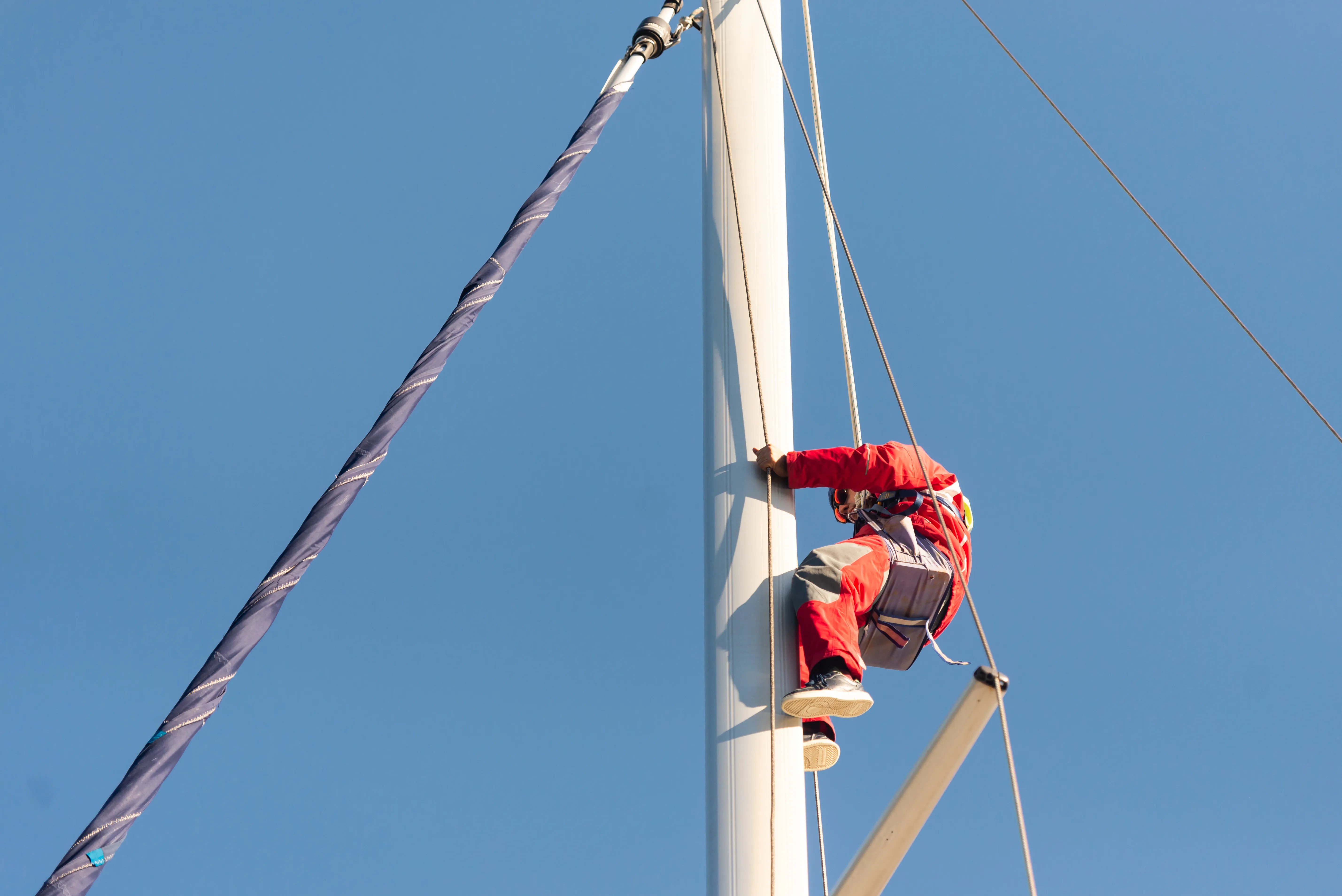
Mast climbing might sound scary, but it’s a standard part of maintaining a vessel and enables you to carry out a whole range of tasks, from checking rigging to inspecting fittings. With the right equipment, preparation and safety measures, climbing a mast can be completed with confidence.
In this guide, we discuss what mast climbing involves, how to do it, and the gear you need. We also answer some frequently asked questions to help sailors of all experience levels stay safe while climbing a mast.
What is mast climbing?
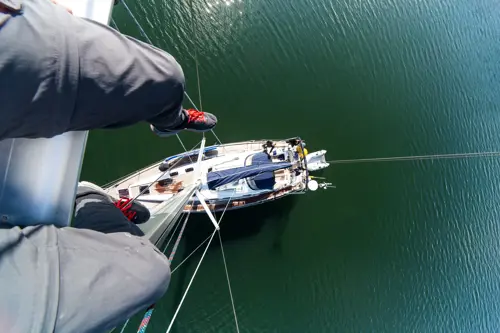
For sailors, mast climbing means going up the mast to carry out checks, maintenance or repairs. This could include inspecting rigging, fixing lights or examining fittings. As yacht masts are typically tall and exposed, it’s important to put safety first and use the right equipment.
There are two main ways to climb a mast. One of the most traditional methods is using a bosun’s chair, in which a crew member is pulled up by a rope and a winch. Another popular option is a climbing harness, which lets you climb the mast yourself. Harnesses are often preferred as they give you more control and don’t always require help from others.
Mast climbing is an important part of looking after a yacht. Regular checks can help spot wear and tear early, preventing potentially costly issues in the future. It’s also useful for quick fixes while at sea or in the marina.
Safety is key when climbing up a mast – using strong, well-maintained equipment and having a backup line in place can help reduce risk. With the right setup, mast climbing is a great way to maintain your yacht and keep it in good condition.
Essential gear for mast climbing
Having the right gear is essential for climbing a mast safely. The main piece of equipment you need is a bosun’s chair or a well-fitted climbing harness. A bosun’s chair is often more comfortable for longer jobs, while a harness offers greater mobility.
A strong, reliable halyard is also important, as this is the line that will support you as you climb. It should be in good condition, free from wear, and properly secured. Wherever possible, a second halyard should be used as a backup for additional peace of mind.
If you plan to climb on your own, mechanical ascenders or a mast climbing system can make the process easier. These devices allow you to move up the mast in controlled steps without relying on someone else to winch you up.
Other useful items include a helmet for protection, gloves for grip, and a tool bag that can be clipped on to keep your hands free. A lanyard or short safety line is also important, as it allows you to secure yourself in place.
Mast climbing safety tips
- Check all equipment first: Inspect halyards, shackles and attachment points for wear or damage before starting your climb.
- Always use a backup line: Set up a second line to provide extra security in case the main line fails.
- Choose the right conditions: Avoid climbing in strong winds or rough seas. Calm, stable conditions make the process much safer.
- Climb slowly and steadily: Keep movements controlled to reduce swinging and maintain balance as you climb.
- Secure yourself at height: Use a lanyard to clip in once you’re ready to start working so you can do this hands-free.
- Communicate clearly: If someone is assisting you, agree on clear signals or commands before you start climbing the mast.
- Keep tools organised: Use a clipped tool bag to avoid dropping items and to keep your hands free.
- Wear protective gear: A helmet and gloves can help prevent injury and improve grip.
- Avoid overreaching: Reposition yourself instead of stretching too far, as this can cause you to lose your balance.
- Take your time: There’s no need to rush. Climbing steadily and carefully will help you stay safe.
Mast climbing FAQs
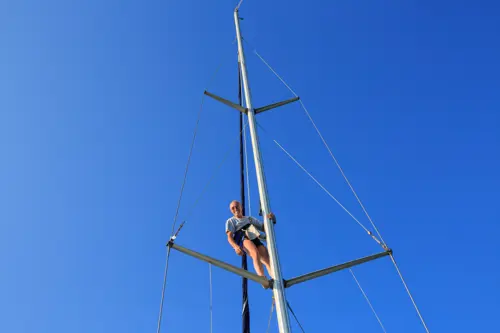
Is mast climbing safe on a yacht?
Mast climbing can be safe when done carefully with the right equipment. Use a secure harness or bosun’s chair with a backup line to reduce risk.
Can you climb a yacht mast on your own?
Climbing a yacht mast on your own is possible using mechanical ascenders or a dedicated mast climbing system. These allow you to move up the mast without needing someone to operate a winch.
What is the safest way to climb a mast?
The safest method is to use two independent lines, a main line and a backup, combined with a harness or bosun’s chair. Climbing in calm conditions and securing yourself at height are also recommended.
Do you need a harness or a bosun’s chair?
Both are commonly used and suit different situations. A bosun’s chair is more comfortable for longer tasks, while a harness offers more support and flexibility.
What should you check before climbing a mast?
Always inspect halyards, shackles and attachment points for wear. Also, make sure all gear is properly secured and suitable for your weight and the conditions.
Can you climb a mast at sea?
It’s possible to climb a mast at sea, but movement caused by waves can make climbing unstable, so it’s safer to wait until you’re in calm waters or docked.
How do you stay stable while working on a mast?
Use a lanyard to clip yourself in at the correct height, which helps keep you steady and allows you to work hands-free.
What gear do you need for mast climbing?
Essential mast climbing gear includes a harness or bosun’s chair, a strong halyard, a backup line, and mechanical ascenders if you’re solo climbing.
How long does it take to climb a mast?
How long it takes to climb a mast depends on the method used and the height of the mast. Remember, a steady, controlled climb is always more important than speed, so take your time and don’t rush.
Why is a backup line important when mast climbing?
A backup line provides a second point of support, helping to prevent accidents if the main line or connection fails.
Specialist yacht insurance through GJW Direct
Now you know how to safely climb your yacht’s mast, and what gear you’ll need, you may want to consider getting specialist yacht insurance through GJW Direct to help financially protect you and your yacht. Get a quick online quote today.
Please note the information provided on this page should not be taken as advice and has been written as a matter of opinion. For more on insurance cover and policy wording, see our homepage.
Got a question? Call our UK call centre 0151 473 8000
GJWDirect is a
 Insurance Services product


©Copyright Ripe Thinking Limited 2026. GJWDirect® is a registered trademark and a trading name of Ripe Insurance Services Limited which is Authorised and Regulated by the Financial Conduct Authority No.313411.
Registered office: One Stockport Exchange, Railway Road, Stockport, United Kingdom, SK1 3SW. Registered in England No. 04507332.