

Your step-by-step guide to painting a yacht
27 July 2026
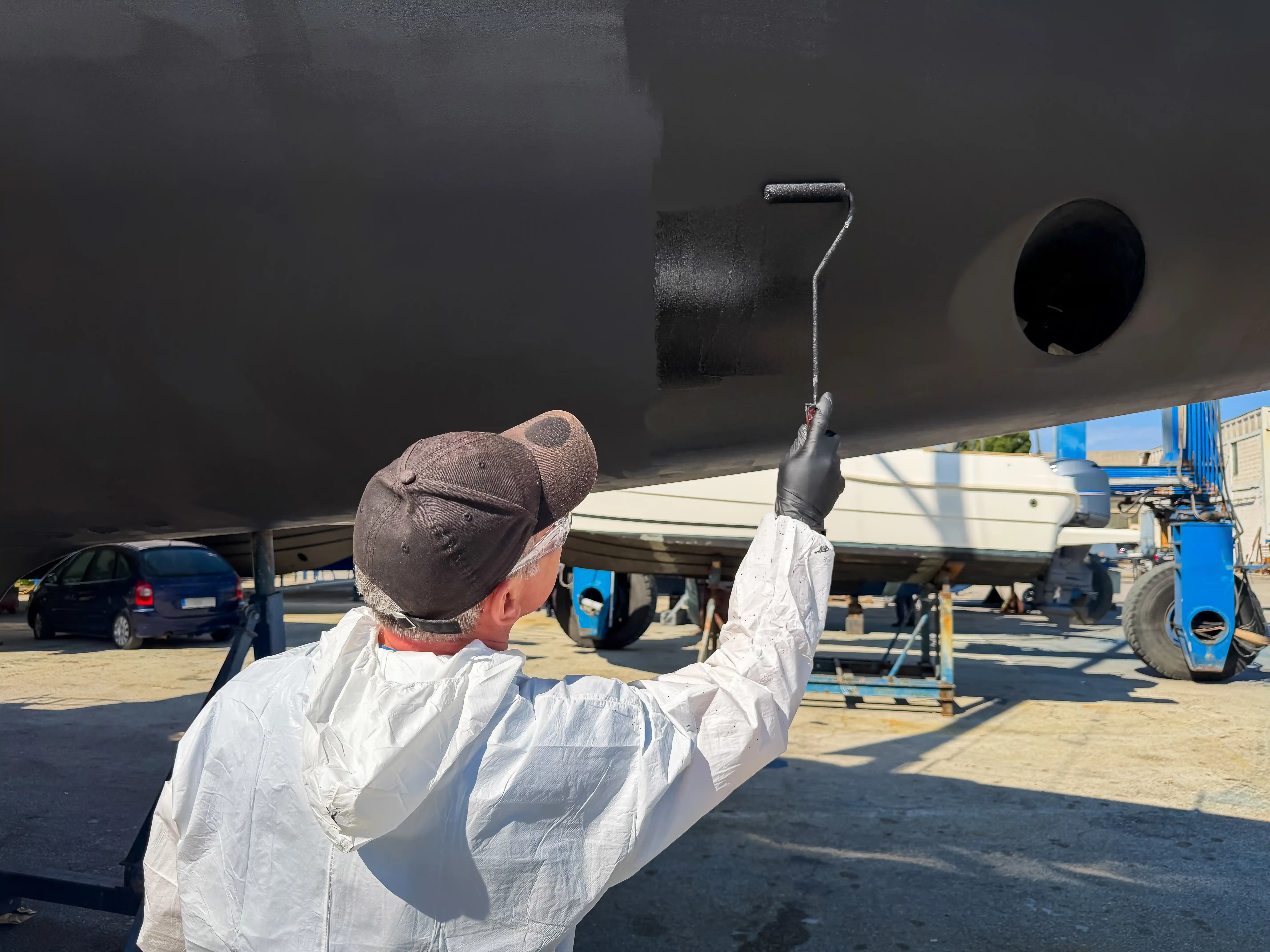
Painting a yacht is an important process to get right. A good paint job can boost your yacht’s appearance, provide essential protection and enhance its resale value.
Here, we share a step-by-step guide to painting a yacht. We’ll highlight when a yacht may need repainting and discuss the different paints you can use.
Does my yacht need repainting?
If you’re wondering whether your yacht needs repainting, there are a few signs to look out for. These include:
- Faded or chalky gelcoat
- Peeling or blistering paint
- Corrosion on metal surfaces
- Scratches and impact damage
- UV deterioration
- Reduced water resistance
How long a paint job on a yacht lasts depends on the type of coating used, the quality of the application, how often the yacht is taken out, and the conditions it’s exposed to. While regular maintenance can extend the life of yacht paint, most marine coatings have a typical lifespan before they begin to degrade. You can expect most decent topside paint to last between five and 10 years, while underwater antifouling paint usually lasts between one and three years.
Marine paint helps to protect yachts against saltwater, sunlight, moisture, and physical wear. Once the barrier it creates begins to fail, the materials underneath can become exposed to damage that can be far more expensive to repair than a proactive repaint.
Should you paint your yacht or hire a professional?
As with many yacht maintenance tasks, it can be difficult to decide whether to repaint your vessel yourself or hire a professional.
Painting your own yacht will no doubt be cheaper than hiring someone to help. But, on the other hand, it takes a lot of time and requires a certain level of skill. You’ll also likely need to purchase equipment you may not have. However, a DIY job can be suitable for smaller yachts or touch-ups.
When you hire a professional, you can expect a high-quality finish and faster completion, plus they’ll have the specialist equipment required. If you have a larger yacht to paint, hiring a professional can be far more convenient than doing it yourself.
How much does it cost to paint a yacht?
The cost of painting a yacht depends on many factors, such as the vessel's size, the condition of the hull, the type of paint used, the labour required, and the number of coats needed. You may also need to consider storage and lifting fees.
Thankfully, you can estimate paint quantities using a yacht paint calculator, which will help you to budget.
Yacht paint calculator
When you paint a yacht, you need to consider:
- Measuring the hull area – For the hull and topsides, use this simple formula: Hull Area (m²) = Length Overall (LOA) × (Beam + Draft) × 0.85
- Manufacturer coverage rates – Find this on the paint’s technical data sheet, usually in square metres per litre
- Primer requirements – You’ll typically need one or two coats of primer
- Undercoat requirements – You’ll typically need one or two coats of undercoat
- Topcoat requirements – You’ll typically need two coats of topcoat
- Allowing for wastage – It's good practice to add 10 to 15% extra paint to account for roller and brush losses, overspray, surface texture, touch-ups, and future repairs
Painting a yacht in seven steps
Here’s your step-by-step guide to painting a yacht.
Step 1 – Choose the right yacht paint
One-pack paint
One-pack polyurethane is a ready-to-use marine paint that doesn't require mixing with a hardener. It's popular with DIY boat owners because it's straightforward to apply using a brush or roller.
Two-pack paint
Two-pack polyurethane, also known as Linear Polyurethane (LPU), consists of a base paint and a hardener that are mixed together right before application. The chemical curing process creates an exceptionally hard, glossy, long-lasting finish.
Antifouling paint
Antifouling paint is designed specifically for the hull below the waterline. It contains biocides or advanced fouling-control technology that discourages the growth of algae, barnacles, mussels, and other marine organisms.
Step 2 – Gather your equipment
To paint a yacht, you’ll need:
- Sandpaper
- Orbital sander
- Primer
- Undercoat
- Topcoat
- Rollers
- Foam rollers
- Brushes
- Masking tape
- Solvent cleaner
- Tack cloths
- PPE
Step 3 – Prepare the surface
Properly preparing the surface of your yacht before painting it will help to ensure a great finish. Preparation should include washing, degreasing, removing wax, filling imperfections, sanding, and masking.
Step 4 – Apply the primer
Primer helps to bond the paint to the yacht's surface by improving adhesion and protecting against moisture and corrosion. Forgetting to use primer or using the wrong type can lead to poor paint adhesion, peeling, blistering, and a significantly shorter lifespan for the finish.
Allow each coat of primer to dry before applying the next layer. Drying times vary depending on the product, temperature, humidity, and ventilation.
Step 5 – Apply the undercoat
You should apply an undercoat between the primer and the topcoat to create a smooth, even surface and improve the performance of the final paint finish. It helps fill minor imperfections, enhances colour consistency, and provides a better surface for the topcoat to bond to. This all results in a durable, professional-looking finish.
Rushing to add additional layers before it’s dry can cause issues. The paint may wrinkle, bubble or completely delaminate. If you paint additional layers too quickly, the uncured solvents in the lower layer get trapped. This can result in a weak, spongy finish that will likely peel.
Step 6 – Apply the topcoat
The topcoat is the final layer of your yacht's paint system and provides colour, gloss, and protection against UV, saltwater, moisture, and everyday wear. It also gives your yacht its finished appearance.
Step 7 – Allow proper curing
For a durable, long-lasting finish, you must let your yacht paint dry properly. While paint may feel dry to the touch within a few hours, it can take several days, or even weeks, to fully cure, depending on the product, temperature, and humidity. During this time, the coating continues to harden and develop its full protective properties.
Yacht painting maintenance tips
Once you’ve painted your yacht, you can maintain the finish through:
- Regular washing
- Waxing where appropriate
- Quickly repairing any scratches
- UV protection
- Seasonal inspections
- Using the correct cleaning products
Painting a yacht FAQs
When is the best time of year to paint a yacht?
The best time to paint a yacht is during spring or early autumn when temperatures are mild, humidity is relatively low, and the weather is typically stable. Most marine paint manufacturers recommend applying paint when temperatures are between 10°C and 25°C, as this allows the coating to be applied evenly, cure properly, and achieve maximum durability.
Avoid painting in direct sunlight, as excessive heat can cause the paint to dry too quickly, leading to brush marks or an uneven finish. Cold temperatures, high humidity, or rain can slow the curing process and reduce adhesion, increasing the risk of blistering or peeling.
Can you paint a yacht while it's in the water?
In most cases, you can’t fully paint a yacht while it's in the water. Any areas below the waterline, including the hull and antifouling coating, must be painted while the yacht is out of the water. This allows the surface to be properly cleaned, prepared, and painted without water interfering with adhesion or curing.
Before carrying out any painting in a marina, check the facility's environmental regulations. Many marinas restrict sanding, scraping, or painting over the water to prevent paint particles, solvents, and debris from falling in.
Can I use yacht varnish over acrylic paint?
Yes, you can apply yacht varnish over acrylic paint if the products you’re using are compatible and the acrylic paint has fully cured. Yacht varnish provides an additional layer of protection against moisture, UV rays, and general wear, while also enhancing appearance with a gloss or satin finish.
Not all acrylic paints can be used in marine environments. If the painted surface is regularly exposed to saltwater or harsh weather, using a complete marine paint system will be more durable than relying on varnish alone.
Can I use yacht varnish over chalk paint?
Yes, yacht varnish can be used over chalk paint, provided the chalk paint is fully cured, and the varnish is compatible with the finish. Applying a marine-grade varnish helps seal the porous surface of chalk paint, making it more resistant to moisture, scratches, and UV exposure.
Although yacht varnish offers excellent weather resistance, chalk paint is designed for interior decorative use and is generally less durable than specialist marine paints. For surfaces exposed to constant sunlight, heavy wear, or direct contact with seawater, a marine paint system will usually provide better performance and longevity.
Specialist sailboat insurance through GJW Direct
While you work on maintaining your yacht, you may want to consider financially protecting your vessel by purchasing specialist yacht and sailboat insurance through GJW Direct. Get an instant online quote today.
Please note the information provided on this page should not be taken as advice and has been written as a matter of opinion. For more on insurance cover and policy wording, see our homepage.
GJWDirect is a
 Insurance Services product


©Copyright Ripe Thinking Limited 2026. GJWDirect® is a registered trademark and a trading name of Ripe Insurance Services Limited which is Authorised and Regulated by the Financial Conduct Authority No.313411.
Registered office: One Stockport Exchange, Railway Road, Stockport, United Kingdom, SK1 3SW. Registered in England No. 04507332.