

A guide to sailing around Britain
15 September 2026
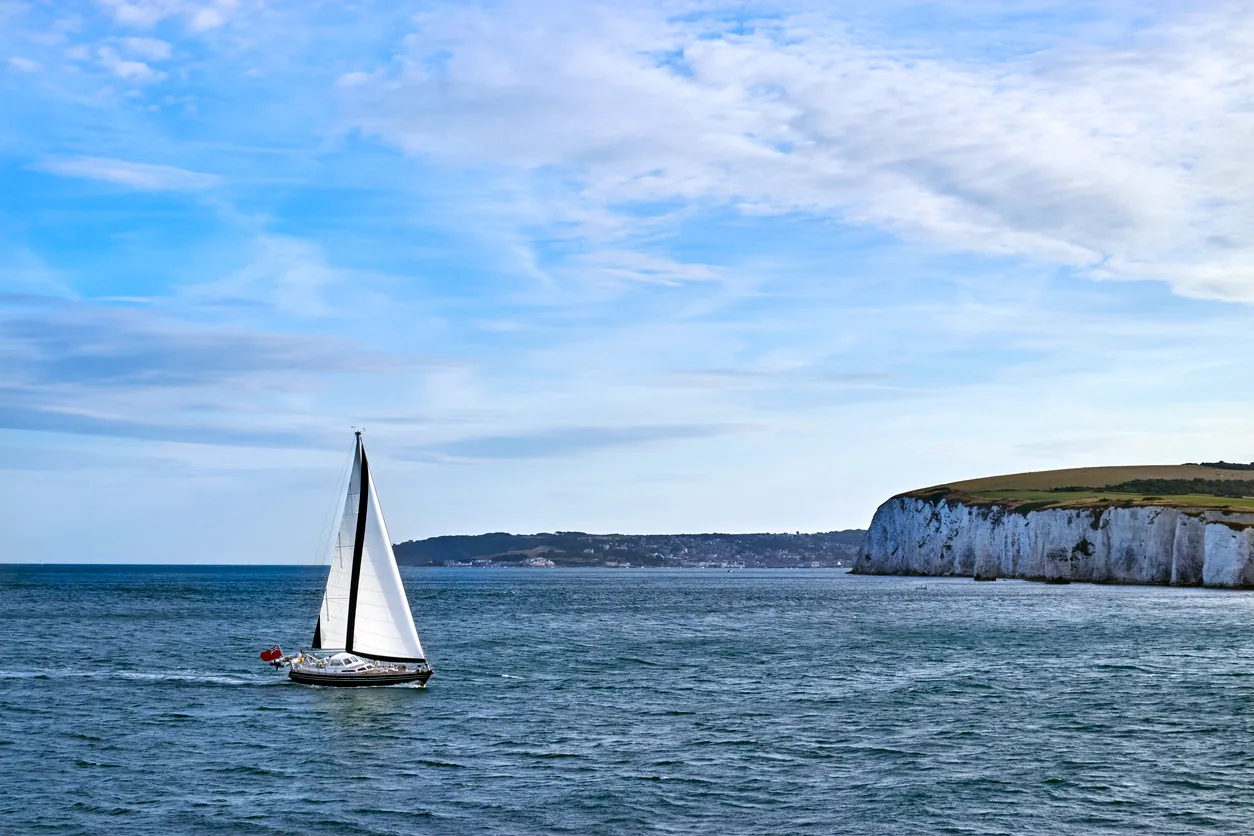
From seeing white cliffs and busy harbours to travelling around wild Scottish headlands surrounded by open water, sailing around Britain provides lots of amazing experiences. With the right boat, good planning, and enough experience, it’s a challenge that many sailors dream of completing.
In this guide, we discuss how to sail around Britain, how long it can take, where you can stop during your journey, and what to think about before setting sail.
Can you sail around Britain in a 30-foot yacht?
It is possible to sail around Britain in a 30-foot yacht, and choosing a smaller yacht comes with some useful benefits. For example, it can be easier to handle the trip with a small crew, it’s cheaper to run than larger vessels, and you can enter smaller harbours than larger yachts.
To take on a challenge of this scale, your 30-foot yacht needs to be in good condition and suitable for offshore sailing. You should know your boat well, including its engine, sails, navigation equipment, steering, and safety gear. Remember that a smaller boat doesn’t necessarily make the challenge easier, as Britain has strong tides, busy shipping areas, and quickly changing weather to navigate.
Before leaving, it’s worthwhile having your boat checked. You may also want to consider getting specialist yacht insurance to help financially protect you and your vessel with cover such as personal accident and third-party liability for your trip.
How long does it take to sail around Britain?
The time your trip takes, and the distance you cover, depend on your route, how far offshore you sail, and how many stops you make. A continuous, fast passage can take only a few weeks, but a more typical cruising itinerary with weather delays, rest days, and stops can take four to eight weeks or longer.
Essentially, you can spend as long as you like sailing around Britain. You might spend an extra day in Cornwall due to a bad forecast, choose to stay in Scotland because you’ve found a beautiful anchorage, or want to wait somewhere for the right tide before tackling a tricky passage, all of which add extra time to your adventure.
How far is it to sail around Britain?
Your total mileage depends on where you start and finish, how closely you follow the coastline, and whether you sail around the north of Scotland or use a route such as the Caledonian Canal. As a guide, sailing around Britain can be around 1,800 to 2,000 nautical miles. Real-world voyages show how much this can vary, with documented trips covering distances of around 1,900 nautical miles.
The distance can increase significantly if you add detours to islands, visit more harbours, or spend time exploring areas such as the Scottish west coast. Your yacht's speed, weather, tidal conditions, and the number of hours you sail each day will also affect how quickly you cover the route.
Possible routes around Britain
There isn’t an official route, and you can choose to plan the trip around your boat, crew, weather, and interests. A popular plan is to start on the south coast and travel clockwise towards Cornwall, Land’s End, and the Bristol Channel, although you could also choose to travel anticlockwise towards the Dover Strait, East Anglia, and northeast England.
Possible stops
There are lots of great places to stop when sailing around Britain, such as:
- Portsmouth and the Solent
- Weymouth
- Dartmouth
- Falmouth
- Newlyn
- Isles of Scilly
- Milford Haven
- Holyhead
- Oban
- Isle of Skye
- Orkney
- Inverness
- Newcastle
- Scarborough
- Whitby
- Hull
- Lowestoft
- Harwich
When planning your itinerary, keep in mind that some passages may be unsuitable in certain weather or tidal conditions, so check local sailing information before deciding on each leg.
What are the hardest parts of the route?
The hardest part is the combination of weather, tides, currents, traffic, and navigation.
Strong tides
British waters contain some very strong tidal streams, particularly around headlands and constricted passages where the water can move very quickly. Places such as the Bristol Channel, the waters around Wales, and parts of northern Scotland require sensible tidal planning.
Changing weather
British weather can change quickly, and wind direction and strength can change without warning, especially around exposed coasts and headlands. Check several forecasts before each passage and keep checking them while you’re sailing. Don’t worry if you need to delay your departure, as waiting in a harbour can be a much better choice than trying to sail in unfavourable conditions.
Northern Scotland
When sailing around the Scottish coast, you might come across strong currents, exposed stretches of coastline, narrow passages, and fewer places to shelter. The Pentland Firth is particularly well known for its powerful tidal streams, making good planning very important.
Busy shipping areas
The waters around Britain include heavily trafficked shipping routes, ferry routes, fishing grounds, and traffic separation schemes, so you’ll share the water with ferries, fishing boats, cargo ships, and large commercial vessels.
For this reason, it’s important to understand the International Regulations for Preventing Collisions at Sea before setting sail. Navigation lights, AIS where fitted, radar where fitted, and a proper watchkeeping routine can all help you to navigate busy shipping areas.
What’s the best time to sail around Britain?
For most cruising sailors, May to September offers the most practical window, with June to August providing the longest days and generally milder temperatures. However, conditions can be challenging at any time, particularly around exposed parts of Scotland and northern waters.
How experienced do I need to be?
Sailing around Britain isn’t easy, and you should be comfortable with:
- Sailing in different wind conditions
- Reefing and changing sails
- Coastal navigation
- Reading charts
- Understanding tides
- Passage planning
- Anchoring
- Using marine VHF
- Dealing with basic emergencies
- Sailing at night
- Making sensible decisions when conditions change
The RYA Coastal Skipper course is designed for sailors preparing for more demanding coastal passages by day and night, covering passage planning, pilotage, emergency procedures, adverse weather, and skippering skills.
If you’re looking at more advanced experience, the RYA Yachtmaster Offshore qualification covers skippering passages up to 150 miles from a harbour and includes navigation, seamanship, weather, safety, and collision regulations.
You don’t necessarily need a Yachtmaster qualification to take a privately owned pleasure yacht around Britain. For a privately owned pleasure vessel used solely for recreation, there’s generally no requirement to hold an RYA skipper qualification to sail the boat around British waters. This is different for vessels used commercially, including some charter and passenger operations.
What qualifications do you need?
For private cruising, there isn’t a qualification you require before sailing a yacht around Britain, but training can boost confidence, skills, and knowledge, and make a huge difference. For example, the RYA Day Skipper practical course develops skills in navigation, pilotage, seamanship, weather, boat handling, and emergency procedures.
You should also understand marine radio. If your boat has marine VHF equipment, make sure it also has the right radio licence and that someone using the radio has the correct operator qualification.
Requirements can differ if you’re sailing commercially, chartering a boat, or operating in specific local waters, so check the rules that apply to you.
How to prepare for your trip
Check your equipment
Before you set off, check:
- Engine and fuel system
- Batteries and charging
- Rigging
- Sails
- Steering
- Bilge pumps
- Navigation equipment
- Anchor
- Safety equipment
- Navigation lights
- VHF radio
- Emergency equipment
Plan each passage
Break your voyage into manageable passages and consider the following for each leg:
- Where you’re leaving from
- Where you can stop
- What the tides are doing
- What the forecast says
- Where you can shelter if the weather changes
- What hazards there are on the route
- What your backup plan is
Plan your stops
Harbours and marinas can become busy in summer, while some smaller places have limited facilities. Check ahead for:
- Berth availability
- Harbour entrances
- Depth and tidal restrictions
- Fuel
- Water
- Food supplies
- Repairs
- Weather shelter
Check weather and tides
Look at wind speed and direction, visibility, and any warnings, then check the tides for the area you plan to visit. A route that looks easy on a chart can become very different when strong wind meets a strong tidal stream.
Always use current charts, tide information, and reliable marine forecasts. Local harbour authorities and sailing guides can also provide important information about entrances and hazards.
Have an emergency plan
Before leaving, make sure everyone knows:
- How to raise an alarm
- How to use the VHF radio
- Where lifejackets are kept
- Where the first-aid kit is
- How to stop the engine
- How to use emergency equipment
- What to do if someone falls overboard
- What to do if the boat loses power
- Where the main safety equipment is stored
Practice important procedures so you and your crew are prepared should something unexpected happen.
Include rest in your plans
Share jobs fairly, make sure everyone gets enough sleep, keep food and water supplies organised, and remember to have fun!
Specialist boat insurance by GJW Direct
Before you set sail for the trip of a lifetime, you may want to consider getting specialist boat insurance through GJW Direct to help financially protect you and your boat. Get a quick online quote today.
Please note the information provided on this page should not be taken as advice and has been written as a matter of opinion. For more on insurance cover and policy wording, see our homepage.




©Copyright Ripe Thinking Limited 2026. GJWDirect® is a registered trademark and a trading name of Ripe Insurance Services Limited which is Authorised and Regulated by the Financial Conduct Authority No.313411.
Registered office: One Stockport Exchange, Railway Road, Stockport, United Kingdom, SK1 3SW. Registered in England No. 04507332.